

Rising up the scale
From soukous to Kigali Boyz Group and the internet to mobile operators, Peter Griffiths tracks the rise of East Africa’s urban music
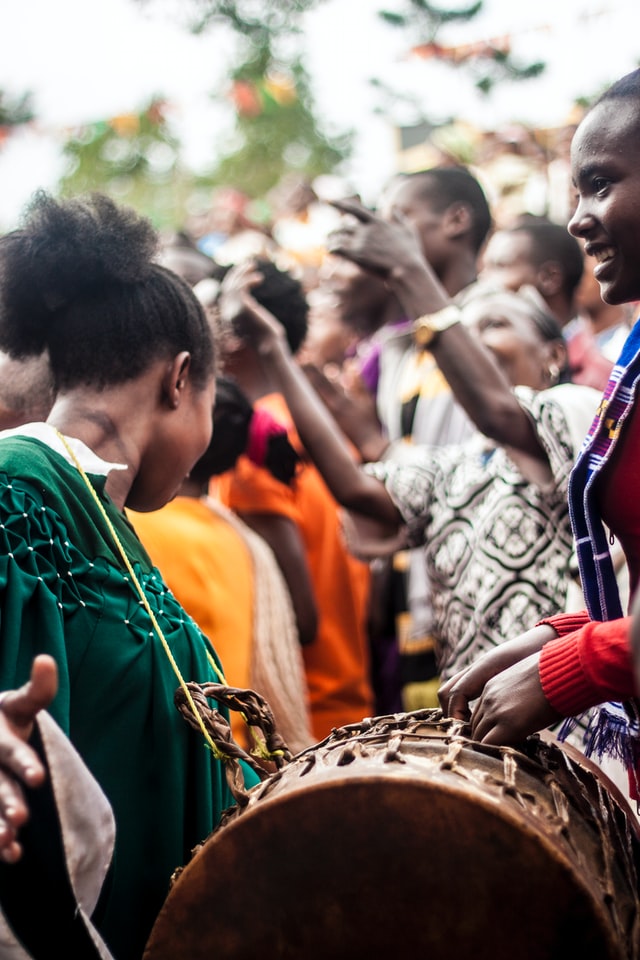
The days of African city boys plucking tunes on their box guitars and radio-phonographs playing the latest ‘international’ fare are long gone. Today it is possible to log on to YouTube and find examples of pretty much every music genre Africa has ever produced.
Unlike in the past, which saw several of Africa’s best musicians packing up for more developed markets, as was the case in the 1980s with the rise of soukous (aka African rumba) in Brussels and throughout Europe, artists can now stay at home and have an audience anywhere in the world. With the internet now widely accessible throughout Africa, everyone has an opportunity to harness and enjoy African talent, and job opportunities have been produced that would have been unthinkable even 15 years ago.
However, the ease of upload and distribution means that there’s inevitably lots of other content on the web. So while the traditional barrier to entry has been removed, it becomes increasingly difficult to become known.
Greater access to the internet as an international marketing machine comes at a price, a price perhaps too high for some. According to President of the Musicians Union of Ghana, Alhaji Sidiku Buari, globalization has just resulted in musicians “expending all their energies trying to sound like Michael Jackson, 50 Cent, Jay-Z, Beyoncé, P Diddy, etc”. But be that as it may, with access to marketing comes audiences and, as Google Inc. knows all too well, with audiences comes money.
Several African musicians have managed to take advantage of the revenue-stream potential the internet provides by offering listeners, home-grown and abroad, sounds that are unique. By doing this, they have ensured that Africa isn’t just a source of inspiration, but is also rightfully part of the international music scene.
Some artists create their own websites, while others take advantage of the upload sites available across various social-media networks. Others do both. But it’s the artists who also build up a repertoire across traditional broadcast channels who are the most likely to succeed.
There’s Jabali Afrika, for example, who claim to be Kenya’s most successful band ‘with more than 70,000 records independently’ sold. They first found success on the radio in 1993. But today, you can find them on their own dedicated website, on CD Baby, LinkedIn, MySpace and Facebook, and they even have their own channel on YouTube.
Moses Kemibaro, who owns internet design company Dotsavvy and supports Kenya Music Week, believes that “there is no better channel than the internet for distributing and selling music”. He adds that “many of Kenya’s leading musicians now have profile pages and do their marketing via social networks even if they don’t have their own websites”.
Across East Africa are examples that prove Moses’ point. Rwanda’s Sandra Karigirwa has a rudimentary website that allows users to buy and sample some of her music. Juliana Kanyomozi from Uganda abandoned plans to have her own fan site in 2006, instead adopting a free MySpace profile page. Juliana, like Khadja Nin of Burundi, also has a Wikipedia entry, an indication that their fans accept them as being part of contemporary history.
But it’s not just the internet that is driving album sales. Radio and mobile operators also provide a platform for musicians to get their music out there and heard. Rwanda installed its first private FM radio station – Radio 10 – five years ago. Since then, four other private stations have sprung up, and the growth of local celebrities, like Rafiki, Queen Allay, Miss JOJO and Kigali Boyz Group (KGB), has not gone without reward.
And late last year, MTN, the largest mobile-phone operator in Africa, signed a collaboration deal with KGB, which would see MTN paying to have the band include MTN-branded words in their songs. But in this case, MTN got a bonus in that band member Gaston Rurangwa also presents on Contact FM, one of Kigali’s most listened-to radio stations. In the future, MTN Rwanda’s data network could support a radio station playing tunes from locally supported artists onto a handset near you.
And if Rwandan President, Paul Kagame, has his way, the internet will reinvent his tiny central African nation, allowing radio and internet to become one and the same. Kenya and Uganda have similar aspirations, and this can only encourage more artists and their fans onto the web.
What is yet to happen is for large international brands to build up and sponsor local artists on the web, in order to tap into the growing consumer markets across Africa. But it will happen as soon as they realise how much cheaper and easier it is to work with local celebrities, and that the next internet evolution will crown local content as king.
Music trivia
5-million+
The number of hip-hop, rap and rock artists trying to get noticed on MySpace
450+
The number of legally licensed digital music websites globally
<0.1%
The number of legally licensed digital music websites in Africa
€2.8-billion+
Estimated record industry revenue from digital sales in 2008
15-25%
Digital music revenue percentage of total music market revenue
Haute fréquence
De la musique soukous au groupe Kigali Boyz et de l’internet aux opérateurs de téléphonie mobile, Peter Griffiths retrace l’évolution de la musique urbaine de l’Afrique de l’est
Les jours où les jeunes des villes africaines grattaient quelques morceaux sur leur guitare ‘box’ et où les anciens postes de radios jouaient les derniers succès ‘internationaux’ sont bien finis. Aujourd’hui, on peut désormais se connecter sur YouTube et trouver des exemples de quasi tous les genres musicaux produits en Afrique.
À la différence des temps passés, qui ont vu les meilleurs musiciens africains plier bagage pour des horizons plus prometteurs – c’était le cas dans les années 1980 au moment de l’apogée du soukous (rumba africaine) à Bruxelles et à travers l’Europe – les artistes restent aujourd’hui chez eux tout en ayant un public dans le monde entier. Grâce à l’internet, largement accessible aujourd’hui sur l’ensemble du continent africain, chacun a la possibilité de capter et d’apprécier le talent de l’Afrique. Ce phénomène a également permis de créer des jobs, ce qui aurait été impensable ne fut-ce que 15 ans auparavant.
Il y a toutefois un revers à la médaille. Les facilités de téléchargement et de distribution signifient que l’on trouve aussi d’autres contenus sur le web. D’un côté les barrières qui freinaient l’entrée sur la toile ont disparu, de l’autre, il devient de plus en plus difficile de se faire connaître.
Clairement, l’utilisation de l’internet comme un outil de marketing international a un prix, sans doute trop élevé pour certains. Selon Alhaji Sidiku Buari, le Président de l’Union des Musiciens du Ghana, la globalisation a ses effets pervers. Aujourd’hui les musiciens “déploient toute leur énergie à essayer de ressembler au son de Michael Jackson, de 50 Cent, Jay-Z, Beyoncé, P Diddy, etc”. Quoiqu’il en soit, on ne peut nier qu’en corollaire du marketing il y a l’audience et comme Google Inc. ne le sait que trop bien, avec l’audience vient l’argent.
Certains musiciens africains ont réussi à tirer profit du potentiel de revenus liés à l’internet, en offrant aux auditeurs nationaux et internationaux, des sons tout à fait uniques. Par ce biais, ils permettent à l’Afrique de prendre légitimement sa part de la scène internationale musicale, sans être simplement réduite à une source d’inspiration.
D’autres créent leur propre site web, ou encore s’intègrent dans les sites mis en ligne par divers réseaux socio-médiatiques. Certains font les deux. Mais ce sont ceux qui arrivent à diffuser leur répertoire via les canaux des médias traditionnels qui ont le plus de probabilités de réussir.
C’est le cas de Jabali Afrika, qui peut prétendre au titre de groupe le plus renommé du Kenya ‘avec plus de 70 000 disques vendus dans le circuit indépendant’. Ils ont d’abord rencontré le succès sur les ondes radio en 1993. Aujourd’hui, vous pouvez également les retrouver sur leur site web, sur CD Baby, LinkedIn, MySpace et Facebook, sans oublier leur propre canal sur YouTube.
Moses Kemibaro, qui possède sa propre société de design pour l’internet Dotsavvy et qui assiste la Semaine de la Musique du Kenya, croit fermement “qu’il n’existe pas de meilleur circuit que l’internet pour distribuer et vendre de la musique”. Il ajoute que “la grande majorité des musiciens vedettes au Kenya disposent aujourd’hui de pages de profil et qu’ils font leur communication via des réseaux sociaux même s’ils n’ont pas de site personnel”.
De nombreux exemples à travers l’Afrique viennent corroborer ce point de vue de Moses. Au Rwanda, Sandra Karigirwa a un site rudimentaire qui permet aux utilisateurs d’acheter et d’écouter des extraits de ses compositions. Juliana Kanyomozi d’Ouganda a abandonné l’idée d’avoir son propre site de fans en 2006, au lieu de cela, elle a adopté une page gratuite sur MySpace. Juliana, comme Khadja Nin du Burundi, a également une entrée sur Wikipedia, ce qui indique que ses fans la considèrent comme une chanteuse inscrite dans l’histoire contemporaine.
Toutefois, il n’y a pas que l’internet qui contribue à la vente des albums. La radio et les opérateurs de téléphonie mobile représentent également une plateforme de diffusion et d’écoute de la musique. Le Rwanda a installé sa première station de radio privée FM – Radio 10 – cinq ans plus tôt. Depuis lors, quatre autres stations de radio privée sont nées, et l’ascension de célébrités locales, comme Rafiki, Queen Allay, Miss JOJO et Kigali Boyz Group (KGB), a porté ses fruits.
Fin de l’année dernière, MTN, le plus grand opérateur de téléphonie mobile en Afrique, a signé un accord de collaboration avec KGB, prévoyant que MTN payerait pour que le groupe inclue dans ses chansons des références à MTN. Signalons au passage que MTN a également reçu un bonus, vu que le membre du groupe Gaston Rurangwa est aussi présentateur sur Contact FM, l’une des radios n°1 de Kigali. Dans le futur, on pourrait imaginer que le réseau data de MTN au Rwanda soutienne une radio qui transmettrait des morceaux d’artistes sponsorisés de la communauté, via un combiné téléphonique à portée de main.
Et si le Président du Rwanda, Paul Kagame l’appuie, l’internet réinventera sa petite nation d’Afrique centrale, permettant à la radio et à l’internet de devenir un seul système. Le Kenya et l’Ouganda partagent des aspirations similaires, ce qui ne peut qu’encourager un plus grand nombre d’artistes et leurs fans à être présents sur le web.
Il reste encore un point en suspens. Cela concerne les grandes marques internationales, elles devraient construire des liens avec les artistes locaux et les sponsoriser sur le web, afin de leur donner une ouverture vers les marchés en croissance du continent africain. Cela arrivera le jour où ces firmes réaliseront qu’il est moins coûteux et plus facile de travailler avec des stars nationales, et qu’en fait, la prochaine évolution consistera à glorifier le contenu local sur la toile.
Rising up the scale
Schaalvergroting met klank
Toegang tot het internet betekende voor Afrikaanse muzikanten dat ze niet meer hoefden te verhuizen om te kunnen doorbreken in de muziekwereld. Ze kunnen nu gewoon thuis blijven en een publiek bereiken overal ter wereld.
Moses Kemibaro, eigenaar van het internetdesignbedrijf Dotsavvy en drijvende kracht achter Kenya Music Week, is van mening dat “er geen beter kanaal is dan het internet voor de distributie en de verkoop van muziek”. Hij voegt er nog aan toe dat “tal van Keniaanse topmuzikanten nu eigen profielpagina’s hebben en hun marketing aanpakken via sociale netwerken, ook al hebben ze zelf geen eigen website”.
De Rwandese Sandra Karigirwa is daar een fraai voorbeeld van. Op haar nochtans rudimentaire website kunnen gebruikers haar muziek kopen of er een paar samples van beluisteren. Juliana Kanyomozi uit Oeganda liet de plannen voor een eigen website varen en opteerde voor een gratis profiel op MySpace. Internet is niet het enige platform dat de verkoop van albums kan promoten. Radio is eveneens een belangrijk element. In Rwanda ging het allereerste FM-radiostation – Radio 10 – een jaar of vijf geleden in de ether. Sindsdien zijn er nog vier andere privézenders bijgekomen, die in zekere mate hebben bijgedragen tot de groei van plaatselijke bekendheden, zoals de Kigali Boyz Group (KGB).
GSM-operatoren bieden nog een andere platform waarmee Afrikaanse muzikanten hun muziek tot bij het publiek kunnen brengen. Eind vorig jaar tekende MTN, de grootste GSM-operator in Afrika, een samenwerkingsovereenkomst met KGB die inhoudt dat de groep van MTN een vergoeding krijgt wanneer ze in haar songs woorden gebruikt die verwijzen naar de operator. In dit eigenste geval kreeg MTN er nog een extraatje bij omdat één van de leden van de groep, Gaston Rurangwa, ook nog presentator is bij Contact FM, één van populairste radiostations in Kigali. En in de toekomst is het niet ondenkbaar dat het datanetwerk van MTN Rwanda een radiostation ondersteunt dat op een telefoon in uw buurt songs speelt van lokale artiesten.